Hey there! As a supplier of Forged Lateral Tees, I've been getting a lot of questions lately about how to make sure these fittings are environmentally friendly. So, I thought I'd share some insights on this topic.
First off, let's talk about what a Forged Lateral Tee is. It's a type of pipe fitting that's used to connect pipes at a 90-degree angle, with a branch coming off the side. These tees are commonly made from materials like carbon steel, stainless steel, and alloy steel, and they're used in a wide range of industries, from oil and gas to plumbing.
Now, when it comes to ensuring the environmental friendliness of a Forged Lateral Tee, there are several key areas to focus on. Let's break them down one by one.
Material Selection
The choice of material is crucial when it comes to environmental impact. For starters, opt for materials that are recyclable. Carbon steel, for example, is one of the most recycled materials in the world. It can be melted down and reused multiple times without losing its properties. Stainless steel is another great option. It's highly corrosion-resistant, which means it has a longer lifespan, reducing the need for frequent replacements.
When sourcing your materials, look for suppliers who follow sustainable mining and manufacturing practices. This ensures that the raw materials are extracted and processed in an environmentally responsible way. For instance, some suppliers use energy-efficient methods to produce steel, which helps to reduce greenhouse gas emissions.
Manufacturing Process
The manufacturing process of Forged Lateral Tees can have a significant impact on the environment. To minimize this impact, modern manufacturing techniques should be employed. Forging, the process used to make these tees, is generally more energy-efficient compared to casting. It involves shaping the metal under pressure, which results in a stronger and more uniform product.
During the forging process, it's important to optimize energy consumption. This can be achieved by using advanced heating technologies that heat the metal more efficiently. Additionally, proper insulation of the forging equipment can help to reduce heat loss, further saving energy.
Waste management is also a critical aspect of the manufacturing process. Any scrap metal generated during forging should be recycled. This not only reduces waste but also conserves resources. By implementing a comprehensive waste management system, manufacturers can ensure that almost all of the scrap metal is reused in the production of new fittings.
Product Design
The design of the Forged Lateral Tee can also contribute to its environmental friendliness. A well-designed tee should have a smooth internal surface. This reduces friction when the fluid or gas is flowing through the pipe, which in turn reduces the energy required to pump it. As a result, there's less energy consumption and lower carbon emissions over the life of the system.
Another design consideration is the size and weight of the tee. By optimizing the dimensions, the amount of material used can be reduced without compromising the structural integrity of the fitting. This not only saves on raw materials but also reduces the energy required for transportation.
Transportation
Transportation is an often-overlooked aspect of environmental impact. To reduce the carbon footprint associated with transporting Forged Lateral Tees, it's important to choose local suppliers whenever possible. This reduces the distance the products need to travel, cutting down on fuel consumption and emissions.
If international shipping is necessary, consider using more environmentally friendly shipping methods. For example, sea freight is generally more fuel-efficient than air freight. Additionally, shipping companies are increasingly adopting sustainable practices, such as using low-sulfur fuels and optimizing their routes to reduce emissions.
End-of-Life Management
When a Forged Lateral Tee reaches the end of its useful life, proper disposal is essential. As mentioned earlier, if the tee is made from recyclable materials like carbon steel or stainless steel, it should be recycled. Recycling not only conserves resources but also reduces the energy required to produce new fittings.
In some cases, the tee may be refurbished and reused. This extends its lifespan and reduces the need for new production. Refurbishment can involve cleaning, inspecting, and repairing the fitting to make it suitable for further use.
Related Products and Their Environmental Impact
In addition to Forged Lateral Tees, there are other related pipe fittings that are commonly used in piping systems. Hexagonal Caps are used to close the end of a pipe. Just like Forged Lateral Tees, they can be made from recyclable materials and should be manufactured using sustainable processes.
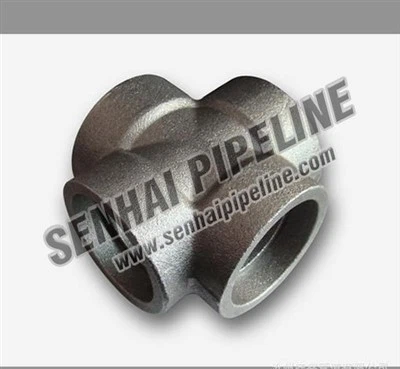
Carbon Steel Forged Cross is another important fitting. It's used to connect four pipes at right angles. By ensuring that these crosses are made from high-quality, recyclable carbon steel and are manufactured with environmental considerations in mind, we can further reduce the overall environmental impact of the piping system.
Union is a fitting that allows for easy disconnection and reconnection of pipes. Similar to other fittings, unions should be made from sustainable materials and produced using energy-efficient methods.
Conclusion
Ensuring the environmental friendliness of Forged Lateral Tees is a multi-faceted process. It involves careful material selection, energy-efficient manufacturing, smart product design, sustainable transportation, and proper end-of-life management. By taking these steps, we can reduce the environmental impact of these fittings and contribute to a more sustainable future.
If you're in the market for Forged Lateral Tees or any other pipe fittings, and you're looking for environmentally friendly options, I'd love to have a chat with you. Feel free to reach out to discuss your requirements and how we can work together to meet your needs while also being kind to the environment.


References
- "Sustainable Manufacturing Practices in the Pipe Fitting Industry" - Journal of Environmental Engineering
- "Recycling of Metals in the Construction and Manufacturing Sectors" - International Journal of Resource Conservation