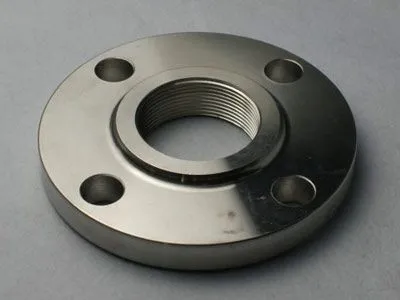
Yo, fellow flange enthusiasts! I'm an owner of a welding neck flange supplier. Maintaining high-quality standards is crucial to us, and a major factor in that is enhancing the corrosion resistance of our welding neck flanges. Corrosion can be a real pain in the neck for these flanges, leading to all sorts of problems like decreased performance, safety issues, and overall shorter lifespan. That's why we're here to talk about how to boost that corrosion resistance and keep these flanges in top-notch condition.
Understanding the Enemy: Corrosion Basics
Before we jump into the solutions, let's quickly understand what's causing this corrosion. There are several factors at play. First off, the environment where the flanges are used is a huge deal. If they're in a place with high humidity, corrosive chemicals, or saltwater, they're more likely to corrode. For example, in offshore oil and gas platforms, the salty air and water can accelerate the corrosion process big time.
Another factor is the type of material used for the flanges. Different metals have different levels of resistance to corrosion. For instance, carbon steel is commonly used for welding neck flanges, but it's more prone to rust compared to stainless steel. The surface finish of the flanges also matters. Rough surfaces can trap moisture and contaminants, which can speed up corrosion.


Material Selection: Picking the Right Stuff
One of the most effective ways to enhance corrosion resistance is to choose the right material for your welding neck flanges. As I mentioned earlier, stainless steel is a great choice. It contains chromium, which forms a passive film on the surface of the metal. This film acts as a barrier, protecting the underlying metal from corrosion. There are different grades of stainless steel available, and the choice depends on the specific application. For example, for applications in the food and beverage industry, where hygiene is crucial, a 304 or 316 grade stainless steel might be used.
Alloy steel is another option. It combines different metals to achieve specific properties. By adding elements like nickel, molybdenum, or copper, the corrosion resistance of the alloy steel can be significantly improved. Alloy steels are often used in high-pressure and high-temperature applications, such as in power plants.
Surface Treatments: Giving Your Flanges a Boost
Surface treatments can also play a big role in enhancing corrosion resistance. Galvanizing is a popular method. It involves coating the flange with a layer of zinc. Zinc is more reactive than the base metal, so it corrodes first, protecting the underlying metal. This sacrificial corrosion is an effective way to prevent rust on carbon steel flanges.
Painting is another option. There are special corrosion-resistant paints available that can form a protective barrier on the surface of the flanges. These paints can be formulated to withstand different environments. For example, there are paints designed for marine environments that can resist the harsh effects of saltwater. Another surface treatment is passivation, which is commonly used for stainless steel flanges. It involves treating the surface with an acid solution to remove any free iron particles and enhance the formation of the passive film.
Design and Installation: Doing it Right
The design and installation of welding neck flanges can also impact their corrosion resistance. The flange joint should be designed in a way that minimizes the accumulation of moisture and contaminants. For example, proper gaskets should be used to create a tight seal and prevent the ingress of corrosive substances. The installation process should also be carried out correctly. The flanges should be properly aligned and tightened to ensure a uniform distribution of stress. If the flanges are not installed correctly, it can lead to gaps or uneven pressure, which can increase the risk of corrosion.
Maintenance: Keeping an Eye on Your Flanges
Regular maintenance is essential to ensure the long-term corrosion resistance of welding neck flanges. Inspections should be carried out periodically to check for any signs of corrosion. This can include visual inspections, as well as non-destructive testing methods like ultrasonic testing or magnetic particle testing. If corrosion is detected early, it can be addressed before it causes significant damage.
Cleaning the flanges regularly is also important. This can help remove any dirt, debris, or corrosive substances that may have accumulated on the surface. Depending on the environment, the cleaning frequency may vary. For example, in a highly corrosive environment, the flanges may need to be cleaned more often.
Related Flange Products
If you're interested in other types of flanges, we also offer Orifice Flange Facing, Long Welding Neck Flange, and Blind Flange. These flanges also require proper corrosion resistance measures to ensure their performance and longevity.
Let's Connect
If you're in the market for high-quality welding neck flanges and want to learn more about how we can help you enhance their corrosion resistance, don't hesitate to reach out. We're always here to answer your questions and provide the best solutions for your needs. Whether it's material selection, surface treatments, or maintenance advice, we've got you covered. So, let's start a conversation and get your project on track!
References
- "Corrosion Handbook" by H. H. Uhlig
- "Materials Science and Engineering: An Introduction" by William D. Callister Jr. and David G. Rethwisch