Carbon steel caps are essential components in various industries, primarily used to seal the ends of pipes, tubes, or vessels. As a leading supplier of Carbon Steel Caps, I am often asked about the manufacturing process. In this blog, I will take you through the step - by - step journey of how these crucial fittings are made.
Raw Material Selection
The first and most fundamental step in manufacturing carbon steel caps is the selection of raw materials. High - quality carbon steel is the material of choice due to its excellent strength, durability, and resistance to corrosion. We source our raw materials from trusted suppliers who adhere to strict quality standards. The carbon steel used typically contains iron, carbon, and small amounts of other elements such as manganese, silicon, and sulfur. The composition of the carbon steel determines its properties, such as hardness, ductility, and weldability. For instance, low - carbon steel, which contains less than 0.3% carbon, is more ductile and easier to form, making it suitable for most cap manufacturing processes.
Cutting the Blanks
Once the raw material is selected, the next step is to cut it into appropriate blanks. The size and shape of the blanks depend on the specifications of the carbon steel caps to be produced. We use advanced cutting technologies, such as plasma cutting or laser cutting, to ensure precise and clean cuts. Plasma cutting is a popular choice as it can cut through thick carbon steel sheets quickly and efficiently. Laser cutting, on the other hand, offers higher precision, especially for smaller or more complex cap designs. The cut blanks are then inspected for any defects or irregularities before proceeding to the next stage.
Forming the Caps
There are several methods for forming carbon steel caps, and the choice of method depends on factors such as the size, shape, and quantity of the caps.
Pressing
Pressing is a common method for forming carbon steel caps. In this process, the cut blanks are placed in a die and then pressed into the desired shape using a hydraulic press. The die is designed to match the shape of the cap, and the pressure applied by the press forces the steel to conform to the die's contours. Pressing is suitable for producing caps with simple shapes, such as round or oval caps. It is a cost - effective method for large - scale production as it allows for high - volume output with consistent quality.
Spinning
Spinning is another method used for forming carbon steel caps, especially for caps with a more complex or custom - designed shape. In this process, a flat blank is placed on a spinning lathe, and a tool is used to gradually shape the steel into the desired cap shape as the blank rotates. Spinning allows for greater flexibility in design and can produce caps with a smooth finish. However, it is a more time - consuming process compared to pressing and is typically used for smaller production runs or for caps with unique requirements.
Heat Treatment
After forming, the carbon steel caps undergo heat treatment to improve their mechanical properties. Heat treatment involves heating the caps to a specific temperature and then cooling them at a controlled rate. The most common heat treatment processes for carbon steel caps are annealing, normalizing, and quenching and tempering.
Annealing
Annealing is a heat treatment process that involves heating the caps to a high temperature and then slowly cooling them. This process helps to relieve internal stresses in the steel, improve its ductility, and reduce hardness. Annealed carbon steel caps are more malleable and easier to machine or weld.
Normalizing
Normalizing is similar to annealing, but the caps are cooled in air instead of a furnace. This results in a more uniform grain structure and improved mechanical properties compared to as - formed steel. Normalized carbon steel caps have better strength and toughness.
Quenching and Tempering
Quenching and tempering is a more complex heat treatment process that involves heating the caps to a high temperature and then rapidly cooling them in a quenching medium, such as water or oil. This process hardens the steel but also makes it brittle. To reduce the brittleness, the caps are then tempered by heating them to a lower temperature and holding them there for a specific period. Quenched and tempered carbon steel caps have high strength and hardness, making them suitable for applications where high - performance is required.
Machining
After heat treatment, the carbon steel caps may undergo machining operations to achieve the desired dimensions and surface finish. Machining processes such as turning, milling, and drilling are used to remove any excess material, create threads, or add other features to the caps. Turning is used to create a smooth outer surface and to ensure that the caps have the correct diameter. Milling is used to create flat surfaces or to cut grooves and slots. Drilling is used to create holes in the caps for various purposes, such as mounting or connecting to other components.
Welding (if applicable)
In some cases, carbon steel caps may require welding to join different parts or to attach additional components. Welding is a critical process that requires skilled welders and proper welding techniques to ensure a strong and reliable joint. The most common welding methods for carbon steel caps are shielded metal arc welding (SMAW), gas metal arc welding (GMAW), and tungsten inert gas welding (TIG). SMAW is a versatile and widely used welding method that uses a consumable electrode coated with flux. GMAW is a faster welding method that uses a continuous wire electrode and a shielding gas to protect the weld from oxidation. TIG welding is a more precise welding method that uses a non - consumable tungsten electrode and a separate filler metal if needed.
Surface Treatment
To enhance the corrosion resistance and appearance of the carbon steel caps, they undergo surface treatment. The most common surface treatment for carbon steel caps is painting or coating. We offer a variety of paint and coating options, such as epoxy coating, zinc coating, and galvanizing. Epoxy coating provides a durable and corrosion - resistant finish, while zinc coating and galvanizing offer sacrificial protection to the steel.
Quality Inspection
Quality inspection is an integral part of the manufacturing process. We have a comprehensive quality control system in place to ensure that all carbon steel caps meet the highest standards. Each cap is inspected for dimensions, surface finish, mechanical properties, and weld quality. We use advanced inspection equipment, such as coordinate measuring machines (CMMs) and ultrasonic testing devices, to detect any defects or deviations from the specifications. Only caps that pass the strict quality inspection are approved for shipment.
Packaging and Shipping
Once the carbon steel caps have passed the quality inspection, they are carefully packaged to prevent damage during transportation. We use high - quality packaging materials, such as wooden crates or cardboard boxes, to ensure that the caps arrive at their destination in perfect condition. We also provide detailed documentation, including material certificates, inspection reports, and packing lists, to our customers.
Related Products
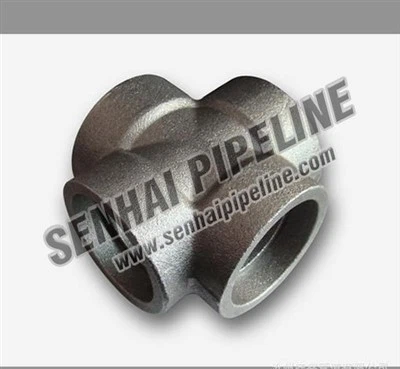
If you are also interested in other pipe fittings, we offer a wide range of products such as Pipe Fittings Cross and Carbon Steel Reducers. These products are also manufactured with the same high - quality standards as our Carbon Steel Caps.
Conclusion
As a supplier of carbon steel caps, we are committed to providing our customers with high - quality products that meet their specific requirements. The manufacturing process of carbon steel caps involves multiple steps, from raw material selection to final packaging, each of which is crucial to ensure the quality and performance of the caps. If you are in need of carbon steel caps or have any questions about our products, please feel free to contact us for procurement and further discussions.


References
- ASME B16.9 - Factory - Made Wrought Buttwelding Fittings
- ASTM A234 - Standard Specification for Piping Fittings of Wrought Carbon Steel and Alloy Steel for Moderate and High - Temperature Service
- AWS D1.1 - Structural Welding Code - Steel