Do hexagonal caps require special tools for installation? This is a question that often comes up among professionals in the plumbing, industrial piping, and construction sectors. As a supplier of Hexagonal Caps, I've encountered this query numerous times. In this blog post, I'll delve into the details of hexagonal cap installation, the tools involved, and whether they truly demand something out of the ordinary.
Understanding Hexagonal Caps
Hexagonal caps, also known as hex caps, are essential components in pipe systems. They are used to seal the end of a pipe or fitting, preventing the flow of fluids or gases and protecting the interior of the pipe from debris, dirt, and moisture. These caps are commonly made from materials such as stainless steel, carbon steel, and brass, and they come in various sizes to fit different pipe diameters.
The hexagonal shape of these caps serves a couple of important purposes. Firstly, it provides a larger surface area for gripping, which is crucial during installation and removal. Secondly, it allows the use of standard wrenches, which are readily available in most toolkits. This hexagonal design makes the caps easier to handle compared to round caps, which can be more challenging to grip.
Standard Installation Tools
In most cases, the installation of hexagonal caps does not require special tools. The primary tools needed for installing hexagonal caps are standard wrenches. A wrench is a hand tool used to provide grip and mechanical advantage in applying torque to turn objects, such as nuts and bolts. For hexagonal caps, an adjustable wrench or a set of open-end or box-end wrenches can be used.
An adjustable wrench is a versatile tool that can be adjusted to fit different sizes of hexagonal caps. It has a movable jaw that can be adjusted to the appropriate width, making it suitable for a wide range of applications. Open-end wrenches, on the other hand, have two open jaws of different sizes at each end. They are useful for quick adjustments and can be used in tight spaces where a box-end wrench may not fit. Box-end wrenches have a closed loop at one or both ends, which provides a more secure grip on the hexagonal cap. They are less likely to slip off the cap during installation, reducing the risk of damage.


In addition to wrenches, a pipe thread sealant may also be required. Pipe thread sealant is used to create a leak-proof seal between the threads of the cap and the pipe or fitting. It helps to prevent the leakage of fluids or gases and ensures the integrity of the pipe system. There are different types of pipe thread sealants available, including Teflon tape, pipe dope, and anaerobic sealants. The choice of sealant depends on the application, the type of fluid or gas being transported, and the temperature and pressure conditions of the system.
Situations Where Special Tools May Be Needed
While standard wrenches are sufficient for most hexagonal cap installations, there are some situations where special tools may be required. For example, in high-pressure applications, a torque wrench may be necessary to ensure that the cap is tightened to the correct torque specification. A torque wrench is a tool that allows the user to apply a specific amount of torque to a fastener. This is important in high-pressure systems, as under-tightening or over-tightening the cap can lead to leaks or damage to the pipe or fitting.
In some cases, the hexagonal caps may be installed in hard-to-reach or confined spaces. In such situations, a socket wrench or a crowfoot wrench may be needed. A socket wrench has a removable socket that can be attached to the end of the wrench. The socket is designed to fit the hexagonal shape of the cap, providing a more secure grip. A crowfoot wrench is a type of open-end wrench that has a head that is offset at a 90-degree angle. It is useful for accessing nuts and bolts in tight spaces where a regular wrench cannot be used.
Another situation where special tools may be required is when installing hexagonal caps on pipes or fittings made of non-standard materials. For example, if the pipe or fitting is made of a hard or brittle material, a specialized wrench or tool may be needed to prevent damage to the cap or the pipe. In addition, if the cap is being installed in a corrosive environment, a tool made of a corrosion-resistant material may be necessary to ensure its longevity.
Complementary Pipe Fittings
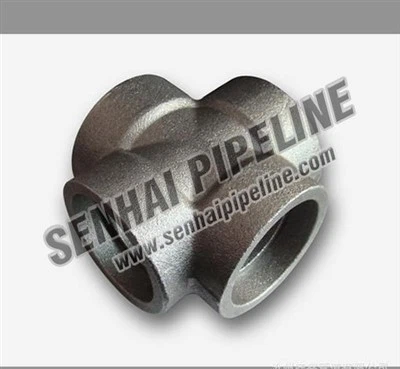
Hexagonal caps are often used in conjunction with other pipe fittings to create a complete pipe system. For example, Socket Welded Equal Tee is a common fitting that is used to connect three pipes of the same diameter at a 90-degree angle. It is often used in industrial piping systems to distribute fluids or gases. Another important fitting is Carbon Steel Nipples, which are short pieces of pipe with male threads on both ends. They are used to connect two female-threaded pipes or fittings together.
When installing these complementary fittings, the same principles apply. Standard wrenches are usually sufficient for installation, but special tools may be needed in certain situations. For example, if the socket welded equal tee is being installed in a high-pressure system, a torque wrench may be required to ensure that the weld is properly tightened. Similarly, if the carbon steel nipples are being installed in a tight space, a socket wrench or a crowfoot wrench may be needed.
Conclusion
In conclusion, while hexagonal caps do not generally require special tools for installation, there are some situations where they may be necessary. Standard wrenches, such as adjustable wrenches, open-end wrenches, and box-end wrenches, are usually sufficient for most installations. However, in high-pressure applications, hard-to-reach spaces, or when working with non-standard materials, special tools such as torque wrenches, socket wrenches, or crowfoot wrenches may be needed.
If you're in the market for hexagonal caps or other pipe fittings, such as Socket Welded Equal Tee and Carbon Steel Nipples, I invite you to reach out for a detailed discussion on your specific requirements. Whether you need advice on tool selection, installation techniques, or are looking to place an order, I'm here to assist you. Let's ensure your pipe systems are equipped with the best products for optimal performance.
References
- Pipe Fitting Handbook: A Comprehensive Guide to Pipe Fittings and Their Applications.
- Industrial Piping Design and Installation Manual.