Can Welding Neck Flanges be used in pipeline systems?
As a leading supplier of welding neck flanges, I am often asked whether these flanges can be used in pipeline systems. The answer is a resounding yes. Welding neck flanges are not only suitable for pipeline systems but are also one of the most commonly used types of flanges in various industrial applications due to their unique design and excellent performance characteristics.
Design and Features of Welding Neck Flanges
Welding neck flanges have a long tapered hub that gradually transitions to the pipe wall. This design provides several advantages. Firstly, the tapered hub helps to reduce stress concentration at the weld joint. When the pipeline is under pressure, the stress is distributed more evenly along the length of the hub, which significantly enhances the strength and durability of the connection. Secondly, the long hub provides a better alignment with the pipe, ensuring a smooth flow of fluid or gas within the pipeline system. This reduces turbulence and pressure drop, which is crucial for the efficient operation of the pipeline.
The welding neck flanges are welded to the pipe, creating a permanent and leak - tight connection. The welding process can be either butt - welding or socket - welding, depending on the specific requirements of the pipeline system. Butt - welding is more commonly used for larger diameter pipes and high - pressure applications, as it provides a stronger and more reliable joint.
Applications in Pipeline Systems
Welding neck flanges are widely used in a variety of pipeline systems across different industries. In the oil and gas industry, they are used in offshore platforms, refineries, and pipelines for transporting crude oil, natural gas, and refined products. The high - pressure and high - temperature environment in these applications requires flanges that can withstand extreme conditions, and welding neck flanges are well - suited for this purpose.
In the chemical industry, welding neck flanges are used in pipelines that carry corrosive chemicals. The seamless connection provided by the welding process prevents leakage, which is essential for safety and environmental protection. Moreover, the smooth internal surface of the flanged connection minimizes the risk of chemical accumulation and corrosion, ensuring the long - term integrity of the pipeline system.
In the power generation industry, whether it is thermal power, nuclear power, or hydro - power plants, welding neck flanges are used in steam, water, and other fluid pipelines. The high - quality welding joint and the ability to withstand high - pressure and high - temperature steam make them an ideal choice for power plant pipelines.
Comparison with Other Types of Flanges
When considering the use of flanges in pipeline systems, it is important to compare welding neck flanges with other types of flanges such as Blind Flange, Carbon Steel Plate Flange, and Carbon Steel Threaded Flange.
Blind flanges are used to close the end of a pipeline. They do not have a central opening for fluid flow, which is different from welding neck flanges. While blind flanges are useful for maintenance and isolation purposes, they are not used for continuous fluid transportation like welding neck flanges.
Carbon steel plate flanges are relatively simple in design and are often used in low - pressure and non - critical applications. They are less expensive than welding neck flanges but lack the strength and reliability provided by the long tapered hub of welding neck flanges. In high - pressure and high - temperature pipeline systems, carbon steel plate flanges may not be able to withstand the stress and may lead to leakage or failure.
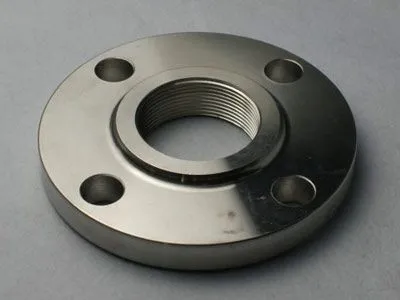
Carbon steel threaded flanges are easy to install and are suitable for small - diameter pipes and low - pressure applications. However, the threaded connection is not as strong as the welded connection of welding neck flanges. Threaded flanges may be prone to loosening under vibration or thermal expansion, which can cause leakage in the pipeline system.


Installation and Maintenance
Proper installation of welding neck flanges is crucial for their performance in pipeline systems. The welding process should be carried out by qualified welders according to relevant welding standards and procedures. Before welding, the pipe and the flange should be carefully cleaned to remove any dirt, oil, or rust, which can affect the quality of the weld joint.
During the welding process, appropriate welding materials and techniques should be selected based on the material of the pipe and the flange, as well as the operating conditions of the pipeline system. After welding, non - destructive testing such as ultrasonic testing or radiographic testing should be conducted to ensure the integrity of the weld joint.
Maintenance of welding neck flanges mainly involves regular inspection for signs of corrosion, cracking, or leakage. If any defects are found, timely repair or replacement should be carried out to prevent further damage to the pipeline system.
Quality Assurance
As a supplier of welding neck flanges, we are committed to providing high - quality products. Our flanges are manufactured in accordance with international standards such as ASTM, ASME, and API. We use high - quality raw materials and advanced manufacturing processes to ensure the performance and reliability of our flanges.
We also have a strict quality control system in place. Every flange undergoes a series of tests, including chemical analysis, mechanical property testing, and non - destructive testing, to ensure that it meets the specified requirements. Our experienced technical team can provide professional advice and support to our customers on the selection, installation, and maintenance of welding neck flanges.
Conclusion
In conclusion, welding neck flanges are an excellent choice for pipeline systems. Their unique design, high strength, and leak - tight connection make them suitable for a wide range of applications in different industries. Compared with other types of flanges, they offer better performance in high - pressure, high - temperature, and corrosive environments.
If you are in need of welding neck flanges for your pipeline system, or if you have any questions about the selection, installation, or maintenance of flanges, please feel free to contact us. We are here to provide you with the best products and services to meet your needs.
References
- ASME B16.5 - Pipe Flanges and Flanged Fittings
- ASTM A105/A105M - Standard Specification for Carbon Steel Forgings for Piping Applications
- API 6A - Specification for Wellhead and Christmas Tree Equipment