Can Welding Neck Flanges be used in offshore applications?
In the demanding and complex world of offshore applications, the selection of appropriate components is crucial for ensuring the safety, efficiency, and longevity of structures and systems. One such component that often comes under scrutiny is the welding neck flange. As a supplier of welding neck flanges, I am frequently asked whether these flanges are suitable for offshore use. In this blog post, I will delve into the characteristics of welding neck flanges, the unique requirements of offshore applications, and evaluate whether they can indeed be used effectively in these challenging environments.
Understanding Welding Neck Flanges
Welding neck flanges are a type of pipe flange that is characterized by a long, tapered neck that is welded to the pipe. This design provides several advantages, including enhanced structural integrity, reduced stress concentration, and improved flow characteristics. The long neck of the flange helps to distribute stress more evenly along the pipe, reducing the risk of fatigue failure and ensuring a more reliable connection. Additionally, the smooth transition from the flange to the pipe minimizes turbulence and pressure drop, which can improve the overall efficiency of the system.
Welding neck flanges are typically made from high-quality materials such as carbon steel, stainless steel, and alloy steel, which offer excellent corrosion resistance and mechanical properties. They are available in a variety of sizes, pressure ratings, and end connections to suit different applications and requirements.
The Demands of Offshore Applications
Offshore applications present a unique set of challenges that require components to be highly durable, reliable, and resistant to harsh environmental conditions. Some of the key factors that need to be considered when selecting components for offshore use include:
- Corrosion Resistance: Offshore structures are exposed to saltwater, which is highly corrosive and can cause significant damage to metal components over time. Therefore, materials used in offshore applications must have excellent corrosion resistance to ensure long-term performance.
- High Pressure and Temperature: Offshore oil and gas production involves high-pressure and high-temperature operations, which require components to be able to withstand extreme conditions without failing.
- Vibration and Shock: Offshore platforms are subject to vibration and shock from waves, wind, and machinery, which can cause stress and fatigue on components. Therefore, components must be designed to resist these forces and maintain their integrity.
- Safety and Reliability: Offshore operations are inherently dangerous, and any failure of a component can have serious consequences for the safety of personnel and the environment. Therefore, components must be designed and manufactured to the highest standards of safety and reliability.
Can Welding Neck Flanges Meet the Demands of Offshore Applications?
Based on their design and characteristics, welding neck flanges are well-suited for use in offshore applications. Here are some of the reasons why:


- Corrosion Resistance: As mentioned earlier, welding neck flanges are typically made from materials such as carbon steel, stainless steel, and alloy steel, which offer excellent corrosion resistance. Additionally, they can be coated or lined with corrosion-resistant materials to provide an extra layer of protection against saltwater corrosion.
- High Pressure and Temperature Resistance: Welding neck flanges are designed to withstand high-pressure and high-temperature operations, making them suitable for use in offshore oil and gas production. The long neck of the flange helps to distribute stress more evenly along the pipe, reducing the risk of failure under extreme conditions.
- Vibration and Shock Resistance: The design of welding neck flanges provides excellent resistance to vibration and shock, which is essential for offshore applications. The long neck of the flange acts as a buffer, absorbing and dissipating the energy generated by vibration and shock, reducing the stress on the flange and the pipe.
- Safety and Reliability: Welding neck flanges are manufactured to strict quality standards and undergo rigorous testing to ensure their safety and reliability. They are designed to provide a secure and leak-free connection, which is crucial for offshore operations where any leakage can have serious consequences.
Comparing Welding Neck Flanges with Other Types of Flanges
While welding neck flanges are well-suited for offshore applications, it is important to consider other types of flanges as well. Here is a comparison of welding neck flanges with some other common types of flanges used in offshore applications:
- Blind Flange: A Blind Flange is used to seal the end of a pipe or a valve. It is typically used in applications where access to the inside of the pipe is not required. Blind flanges are available in a variety of materials and pressure ratings, but they do not provide the same level of structural integrity as welding neck flanges.
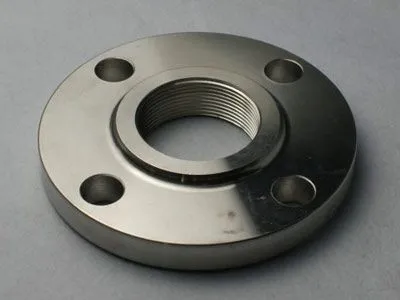
- Carbon Steel Threaded Flange: A Carbon Steel Threaded Flange is a type of flange that is threaded onto the pipe. It is typically used in low-pressure applications where welding is not feasible. Threaded flanges are easy to install and remove, but they are not as strong as welding neck flanges and are more prone to leakage.
- Socket Welding Flange: A Socket Welding Flange is a type of flange that is welded to the pipe using a socket weld. It is typically used in small-diameter pipes and low-pressure applications. Socket welding flanges are easy to install and provide a good seal, but they are not as strong as welding neck flanges and are more prone to fatigue failure.
Conclusion
In conclusion, welding neck flanges are a suitable choice for offshore applications due to their excellent corrosion resistance, high pressure and temperature resistance, vibration and shock resistance, and safety and reliability. While other types of flanges may also be used in offshore applications, welding neck flanges offer superior performance and durability, making them the preferred choice for many offshore projects.
If you are in the market for welding neck flanges for your offshore application, I encourage you to contact me to discuss your specific requirements. As a supplier of high-quality welding neck flanges, I can provide you with the products and expertise you need to ensure the success of your project.
References
- ASME B16.5 - Pipe Flanges and Flanged Fittings
- API 6A - Specification for Wellhead and Christmas Tree Equipment
- ISO 13628 - Subsea Production Systems